

TL;DR
Lower the asking rent when the ongoing monthly price is the problem. Consider a move-in incentive when the price is competitive but the upfront cost is an obstacle. If the issue is poor photos, missing information or difficult viewing arrangements, fix that before discounting.
Neither option guarantees a faster rental. Compare the first-year cost, the vacancy days the offer would need to save, and the assumptions behind any longer-term savings.
Start With Why the Listing Is Not Converting
A quiet listing does not automatically mean you need a free month. Look at comparable units and where prospective renters drop out.
At a Glance: What the Listing Is Telling You
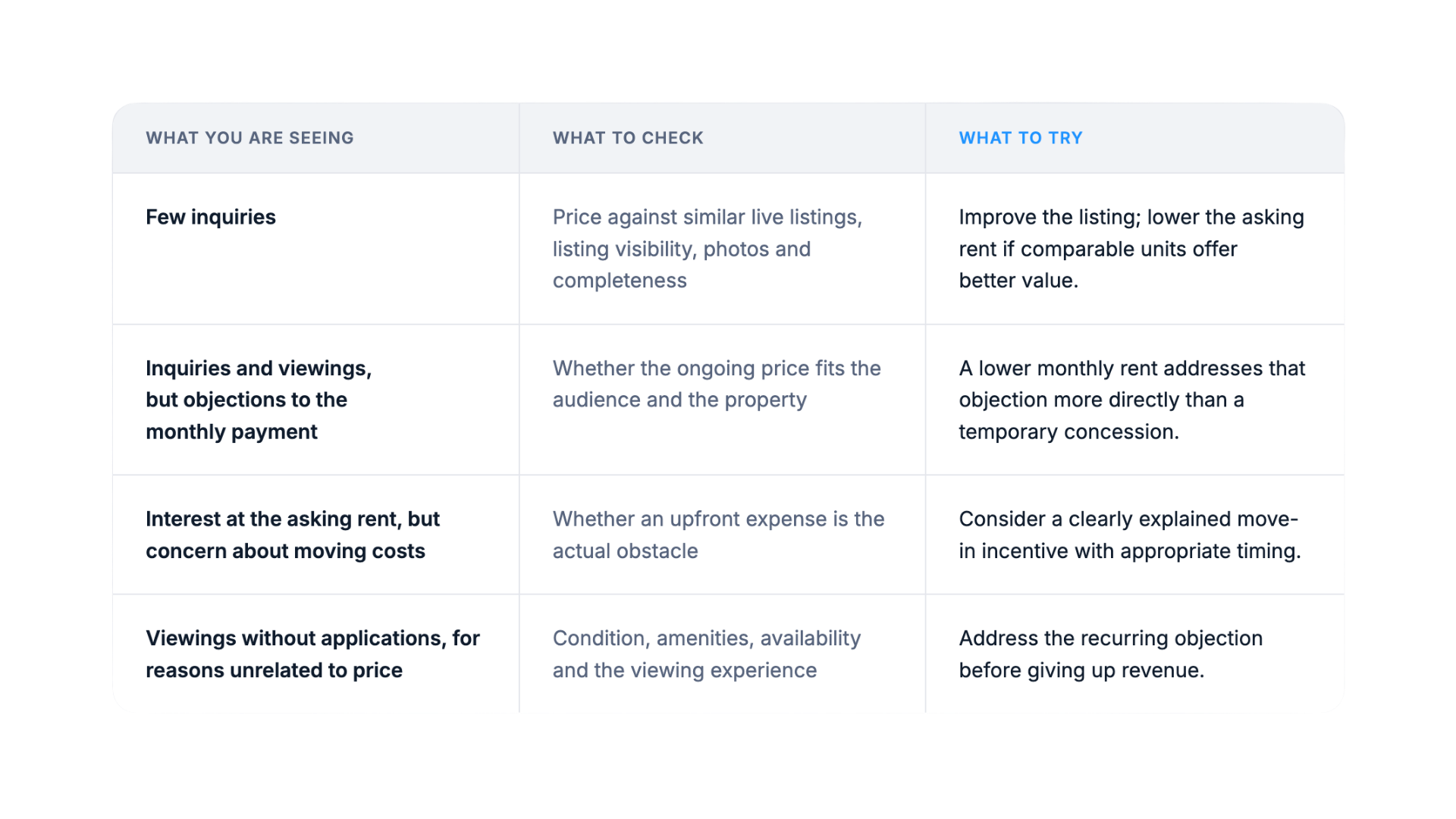
These are diagnostic clues, not proof. Ask interested renters what is holding them back and compare their feedback with the alternatives they can rent now.
Two offers with the same annual cost can solve different problems. A renter worried about monthly affordability may prefer lower rent. Someone managing moving expenses may value an upfront concession. An incentive delivered at the end of the year does not solve an immediate cash-flow problem.
Compare the First-Year Cost
Illustrative unit: $3,100 per month over 12 months. This is a worked example, not a current market benchmark.
At full price, annual rent is $3,100 × 12 = $37,200. With one month free, it is $3,100 × 11 = $34,100.
Effective monthly rent is the rent collected over the period divided by the number of months:
$34,100 ÷ 12 = $2,841.67, approximately.
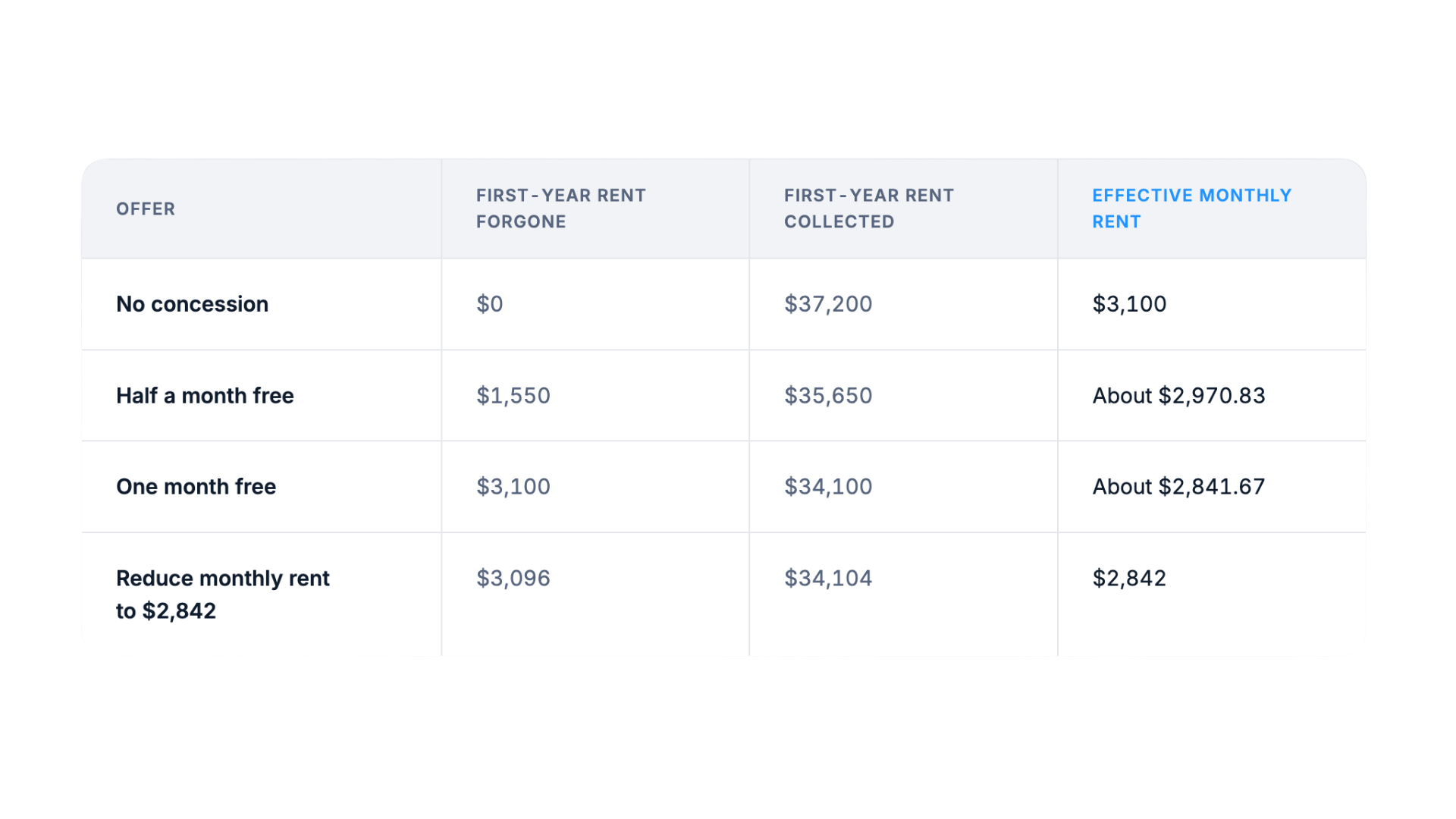
One free month is an 8.33% discount on the first year's full rent. A reduction to $2,842 is almost equivalent, with a $4 annual difference caused by rounding.
For cash bonuses or gift cards, subtract their cost from rental receipts before comparing the offers. For included parking, count revenue you would realistically have earned separately. A stall that was already included, or would otherwise sit empty, is not automatically a $150 monthly sacrifice.
How Many Vacancy Days Must the Incentive Save?
Compare the concession with the gross rent you would forgo while waiting:
Monthly rent ÷ 30.4 = approximate daily rent.
At $3,100 per month, that is about $101.97 per day.
Concession cost ÷ daily rent = vacancy days needed to offset the concession.
- Half a month free: $1,550 ÷ $101.97 ≈ 15.2 days.
- One month free: $3,100 ÷ $101.97 ≈ 30.4 days.
A half-month concession therefore needs to bring the start date forward by roughly 16 whole days to recover its cost in gross rent alone. Two weeks is close, but falls short.
This is a threshold, not a prediction that the offer will work. It assumes the concession is what brings occupancy forward and that the comparison otherwise stays the same. Consider additional costs only where they differ between the two scenarios; do not count expenses you would pay either way twice.
Compare Longer-Term Outcomes as Scenarios
A one-time concession and an ongoing reduction can separate after year one. But the result depends on what happens next.
For the example below, assume continuous occupancy, no rent increases, no additional concessions, and collection of $3,100 monthly after the first-year incentive. Compare that with a monthly rent reduced to $2,842 throughout:
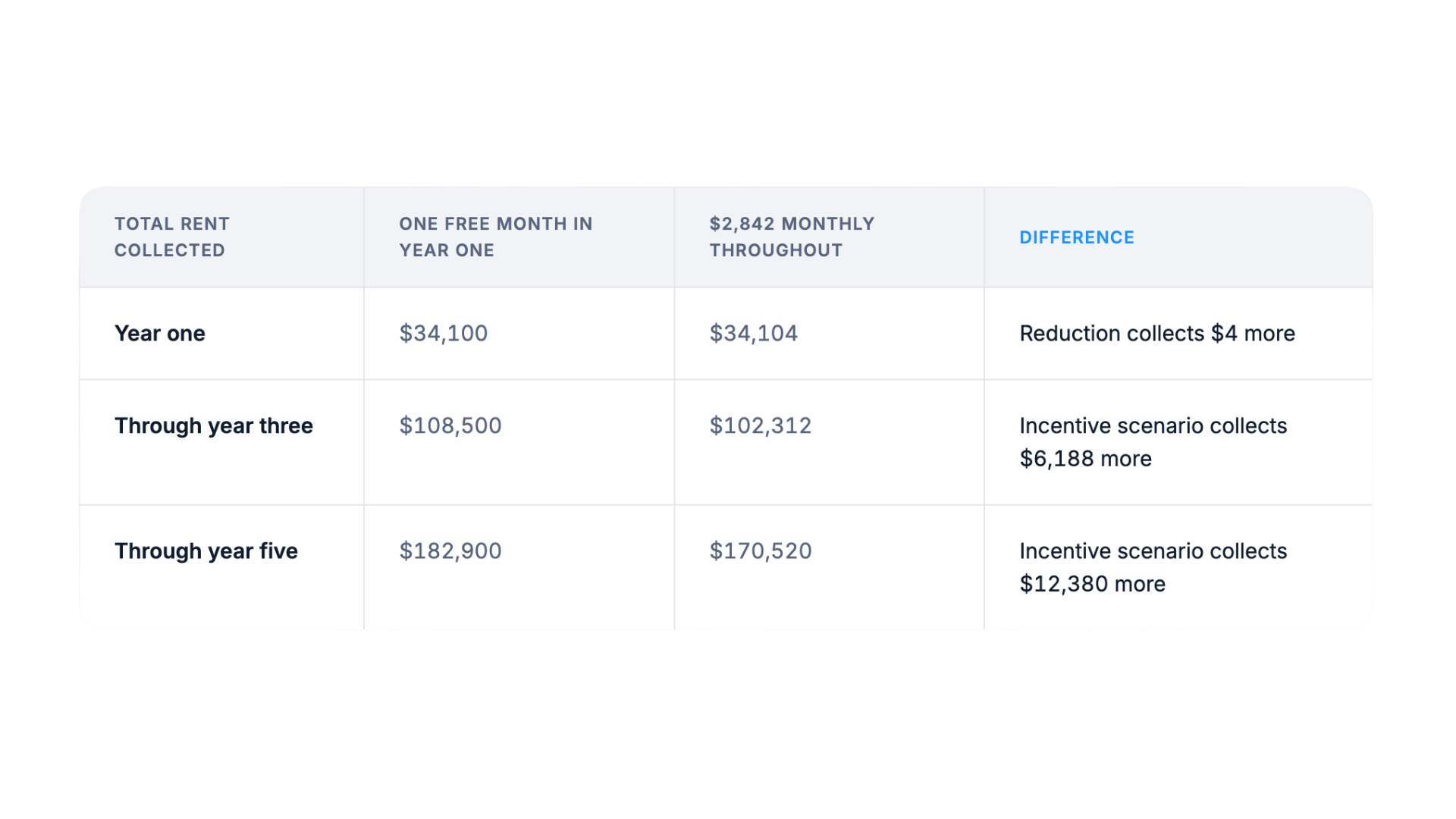
The higher later receipts are an assumption, not a guaranteed benefit of offering an incentive. Further concessions, a different occupancy period or a changed rent would change the result. This comparison does not establish the lawful rent or how a concession affects a tenancy; those questions are outside this pricing model.
If your unit repeatedly needs a concession to compete, compare its effective price with similar properties. Preserving a higher advertised number is not useful by itself if renters will not pay it.
Present the Offer Without Making Renters Decode It
Show the actual monthly payment and the incentive separately. Include the amount, timing, applicable term and any conditions. Label effective rent as an average over the specified period, not necessarily the payment due each month.
For example: “Monthly rent: $3,100. One month free over a 12-month term. Total first-year rent: $34,100; average monthly cost approximately $2,841.67.” The final listing should also explain when the free month applies.
Choose the offer for the objection you are addressing. An upfront incentive and a later credit are not interchangeable for someone facing moving costs. Do not promise a structure before confirming that it fits your tenancy requirements.
Keep the advertised terms consistent. Update the price and description on each listing platform, then reshare the current listing link. Changing a linked page does not update the text of separate ads automatically. Our guide to rental listing sites can help you plan where to share it.
Keep screening consistent. A promotion changes the offer, not the standard used to evaluate an application. See our guide to screening before booking a viewing.
FAQ
Does effective rent mean the tenant pays that amount every month?
No. Effective rent is an average over a stated period. Show the actual payment schedule and when the incentive applies so the renter can distinguish monthly payments from the average cost.
Is included parking cheaper than a free month?
Compare the realistic cost to you and the value to the renter. If the stall would otherwise earn separate income, count the revenue forgone over the offer period. If it would sit empty, including it may cost less, but it only helps if the renter wants it.
Can the calculator tell me which offer will fill the unit faster?
No. It compares costs under stated assumptions. Use comparable listings, inquiry and viewing feedback, and the vacancy break-even threshold to decide which offer to test.