
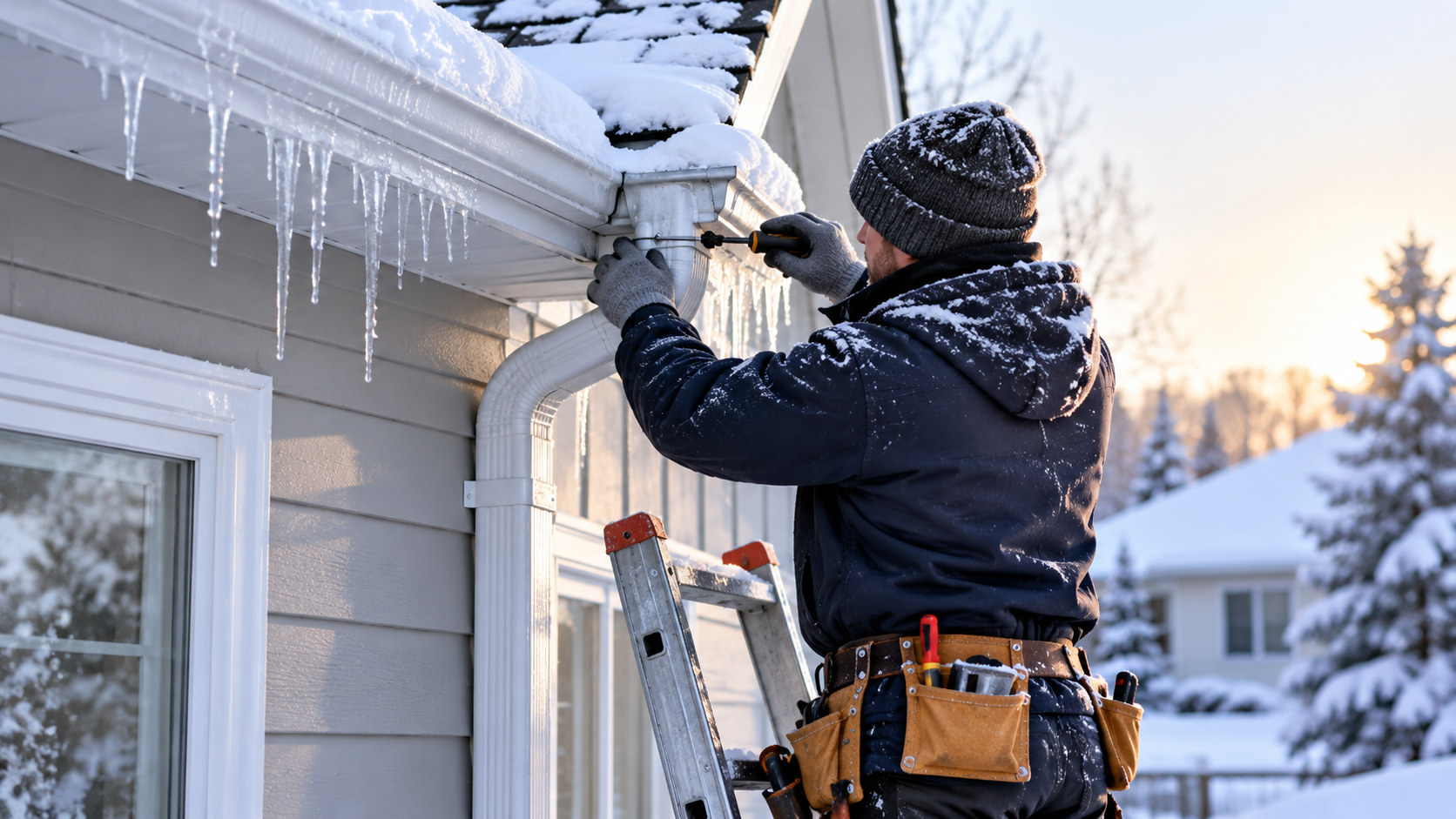
A winter maintenance plan needs more than a list of jobs. Each job needs someone responsible for it and a deadline that comes before the problem does.
A rental in Calgary and a basement suite in Vancouver may need the same basic checks at different times. Use the local forecast, the building’s history and the equipment instructions to set your schedule.
Start with heating, alarms, outdoor water and drainage. Then arrange ongoing checks, a plan for any empty unit and a clear way for tenants to report trouble. This checklist covers those steps, with local examples where rules differ.
Before freezing weather: book, test and prepare
Heating and alarms
- [ ] Book the heating service before you need the system every day. Use a qualified contractor for the equipment. Natural Resources Canada recommends a fall heating check-up. Have cold rooms, unusual noises and previous breakdowns investigated during the visit.
- [ ] Check filters and airflow. Clean or replace filters on the manufacturer’s schedule, and keep supply and return vents clear. Use the maintenance instructions for the actual furnace, boiler, baseboard or heat-pump system.
- [ ] Arrange fuel-burning appliance and chimney maintenance. Have a professional inspect fuel-burning equipment at least annually or as the manufacturer directs; arrange annual chimney cleaning for a wood-burning fireplace. Health Canada’s CO guidance explains the checks.
- [ ] Test smoke alarms and check replacement dates. Health Canada recommends monthly testing and replacing smoke alarms more than ten years old. Follow the manufacturer’s instructions, including any earlier replacement date. Smoke-alarm guidance
- [ ] Check CO-alarm locations, condition and expiry dates. Follow current local requirements and the manufacturer’s instructions. In Ontario, expanded rules took effect January 1, 2026, including every-storey coverage in affected homes and suites. Use the provincial guidance for homes or multi-unit buildings to check the applicable layout.
Keep a record of tests, replacements and repairs. A reminder to tenants does not replace the landlord’s required inspections or maintenance.
Outdoor water and drainage
- [ ] Disconnect hoses and winterize outdoor taps before the first freeze. Shut off and drain the supply where the system requires it; follow the instructions for the installed tap. Toronto’s guidance specifies doing this before the first frost.
- [ ] Check vulnerable water lines. Look for exposed pipes near exterior walls, in crawl spaces and in unheated areas. Address insulation and cold-air leaks; ask a plumber about lines that have frozen before. If heat cable is needed, have a qualified person select and install the correct product.
- [ ] Arrange irrigation winterization. Follow the system’s shutdown and drainage procedure. Turning off the timer alone does not establish that the pipes are empty.
- [ ] Identify the domestic-water shut-off. Label it and show tenants how to reach it safely. In a multi-unit building, clarify which valve they may use and whom to call; do not ask them to operate shared building or fire-protection equipment.
- [ ] Clear gutters and check downspouts. Remove obstructions before heavy rain or freezing conditions, then recheck after leaf fall. Direct runoff away from the foundation without creating another hazard.
- [ ] Review any property-specific systems. If the rental has a sump pump, well or septic system, add the service checks recommended for that installation.
Roof, exterior and access
- [ ] Inspect the roof from the ground for visible damage. Arrange a roofer for damaged flashing, missing shingles, recurring leaks or ice dams. Gutter cleaning alone does not address all ice-dam causes; attic air leakage, insulation and ventilation can also matter. NRCan’s roof and attic guidance
- [ ] Check doors, windows and weatherstripping. Repair obvious gaps and faulty latches. Investigate persistent condensation rather than assuming every moisture problem will be solved by caulking.
- [ ] Check exterior vents and dryer exhaust. Arrange cleaning where needed and keep outlets unobstructed. Maintain the equipment’s specified clearances.
- [ ] Arrange hazardous branch work. Use an arborist where appropriate, and contact the utility about branches near power lines.
- [ ] Assign snow and ice work before a storm. Include steps, paths, shared access and adjacent sidewalks. Confirm the lawful division of responsibility, the local deadline and a backup if the usual person is unavailable.
For example, Vancouver requires owners and occupants to clear the full width of adjoining sidewalks by 10 a.m. each day when snow or freezing conditions apply. That is a local rule, not a Canada-wide deadline. City of Vancouver
Give tenants a clear winter plan
Share the emergency number, backup contact and relevant heating instructions. Confirm entry arrangements for planned work under the rules that apply to the tenancy. A general winter email is not formal notice of entry.
Adapt this note to the property:
Hi [name], we're getting the property ready for winter. A few things to know:
• Heating service: booked for [date]. We'll confirm the entry details separately, with any notice required.
• Heat: please keep it on in cold weather, even when you're away. Tell us if a room won't warm up or the water stops running.
• Leaks: the water shut-off you can use is [location]. Turn it off only if you can reach it safely, then call [urgent number]. Stay out of standing water and away from wet electrical equipment.
• Outdoor tap: [already winterized / being winterized on date]. Please leave the hose disconnected.
• Alarms: if any alarm chirps, beeps or seems faulty, let us know right away. Please don't disable or remove an alarm. If the carbon monoxide (CO) alarm sounds, leave immediately and call 911 from outside. Don't wait for us to reply.
• Snow and ice: [person or contractor] clears [areas]. Backup: [name].
Urgent problems: [phone]. Backup: [phone]. Everything else: [email or message channel].
Health Canada’s CO emergency guidance prioritizes getting outside and calling emergency services. Keep that instruction distinct from routine alarm maintenance.
During winter: follow up on the occupied unit
- [ ] Keep the alarm-testing plan current. Follow local duties and equipment instructions, arrange any required access and record faults and fixes.
- [ ] Check in about cold rooms, condensation and leaks. A short message can identify a problem that needs a visit; it does not replace an inspection when one is necessary.
- [ ] Maintain filters and equipment on schedule. Do not wait for the system to stop working.
- [ ] Provide the required heat. Check the minimum-temperature rules that apply locally, and investigate uneven heating. One thermostat reading doesn't show that every room is warm enough.
- [ ] Keep emergency contacts current. Save a plumber, heating contractor and backup person who can attend when you cannot.
Whenever a unit is empty: make a separate plan
An empty unit needs checks from the day it becomes empty, not just a monthly reminder.
- [ ] Contact your insurance representative. Confirm how the policy classifies the situation, whether notice or permission is required, what coverage remains, and the required inspection interval. Ask about heating, water shut-off and drainage conditions.
- [ ] Arrange a suitable heat and plumbing plan. Keep vulnerable areas protected while the system remains in service. If shutdown and drainage are required, have a qualified person plan the work around the building’s heating and other systems.
- [ ] Name the person making checks and keep a log. Record the date, heat status, leaks or other concerns and any action taken. Provide access and a backup.
- [ ] Confirm utility service continues. Check the provider arrangements when the tenant closes their account. Include a response plan for loss of power or heat.
Insurance requirements vary. IBC notes that policies can require regular or daily checks during heating-season absences; it also cautions that vacant-property freezing damage may be excluded even with vacancy permission. A thermostat setting and occasional visits do not establish coverage. IBC guidance on checks · vacancy
For BC Hydro customers: a Rental Premises Agreement can help avoid disconnection during vacancy. The current agreement page says it takes effect if no application is received within 14 days after the tenant closes the account. The owner is responsible for services during the vacant period—not only from day 15—and must notify BC Hydro no later than two days after a covered unit is vacated or sublet. Check that the agreement covers your unit. BC Hydro
After snow, a cold snap or a thaw
- [ ] Check access routes and drainage. Deal with snow and ice, and check that meltwater has a clear path away from the building.
- [ ] Check appliance exhaust outlets for snow and ice. Keep the manufacturer’s clearances and use a professional where safe access or the equipment condition is uncertain. Health Canada
- [ ] Look for roof damage and water entry. Inspect safely from the ground; check accessible basement areas and follow up on tenant reports of drips or damp patches.
- [ ] Respond promptly to low or no water flow. Check for a utility outage and contact a plumber if freezing is suspected. Do not use an open flame or attempt work in an unsafe or inaccessible space. EPCOR’s frozen-pipe guidance
- [ ] Treat heat loss as an urgent problem. Arrange assessment and safe next steps for occupants and the property. Do not rely on outdoor cooking equipment or generators indoors.
Turn the checklist into assigned work
A tick is useful only when the job is actually complete. Keep a simple record:
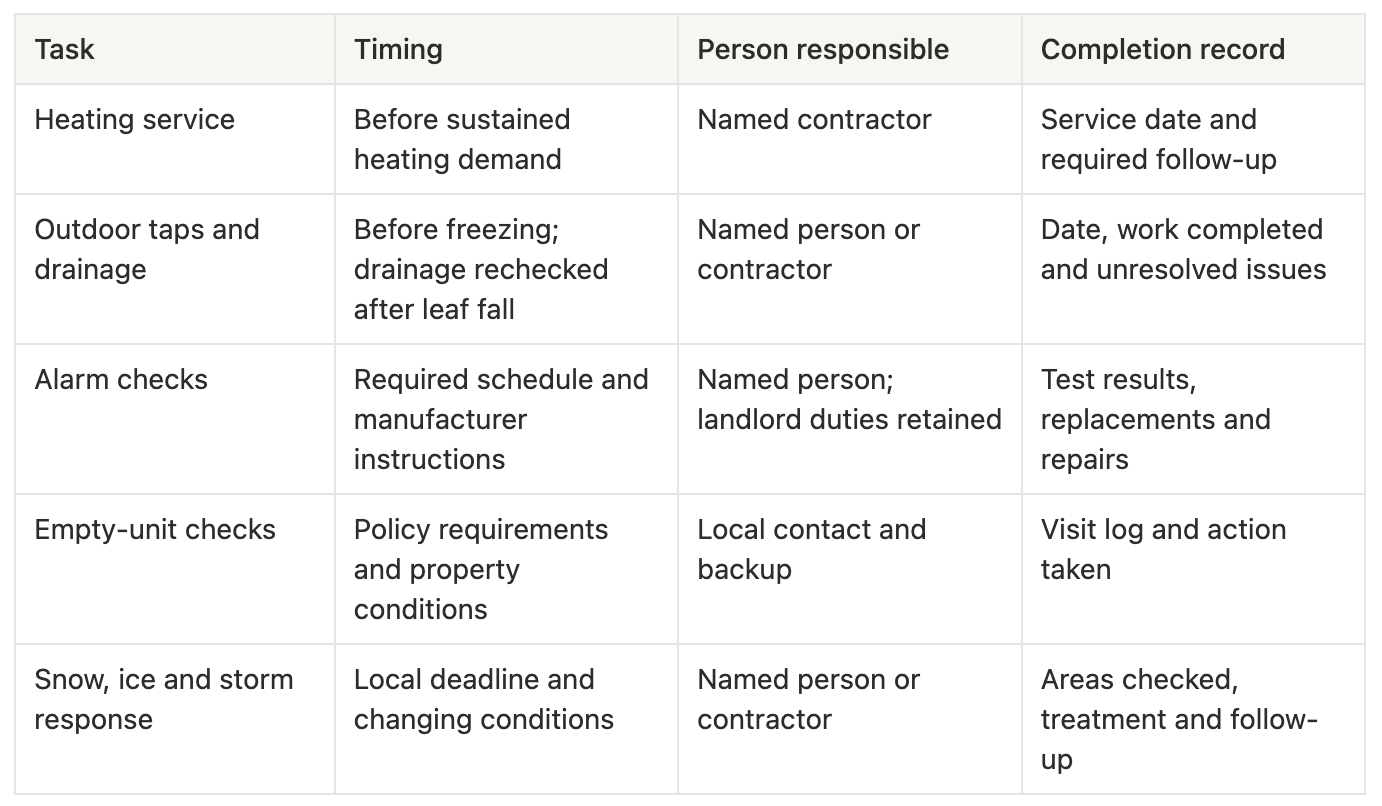
Start with unresolved heating or alarm problems, exposed plumbing and blocked drainage. Assign the remaining work, then send the tenant note before the next cold spell.
FAQ
When should I winterize a rental property?
Complete freeze-sensitive work before freezing weather reaches the property. Book heating service ahead of demand, disconnect hoses and winterize outdoor taps, and keep drainage clear. Use the local forecast rather than a national calendar date.
How do I protect pipes in an empty rental?
Confirm the insurer’s requirements, arrange an appropriate heating and plumbing plan, and have someone check at the required interval. Insulation, utility continuity and a prompt response to heat loss all belong in that plan.
Can I ask tenants to help with winter checks?
You can communicate practical steps and ask tenants to report problems promptly. Confirm the local rules before assigning tasks, and retain the landlord’s required maintenance and testing responsibilities. Keep professional work and emergency response clearly identified.