
TL;DR
Canadian rent reports disagree because they measure different parts of the market. Asking rent is what landlords advertise for available units. In place rent is what tenants currently pay, often under leases signed years ago.
For a vacant unit, start with current asking rents and comparable listings. For an existing tenancy, use paid-rent, turnover and vacancy data as context. Neither a national average nor a market headline tells you what your specific property should rent for.
Which Rent Report Should You Use?
How to Use the Data to Price a Vacancy
A report gives you a starting point. The listings competing with your unit help you turn it into a price.
- Match the location. Use your city or neighbourhood. Canada-wide and regional averages are background context.
- Match the unit. Compare the same bedroom count, property type and furnishing status. A basement suite and a new condo can sit in different price brackets even on the same street.
- Check the timing. Prefer recent asking-rent data when assessing current competition. Monthly reports are useful when conditions are changing; check the reporting period as well as the publication date.
- Finish with live listings. Look at comparable units renters can view now. Account for differences such as condition, included amenities and advertised incentives.
- Use a range before choosing a number. If your proposed rent sits above similar available units, identify what supports the premium. A city average alone does not justify it.
Our guide to the best rental listing sites for landlords in Canada shows where to find that competing inventory.
Why Rents Can Rise and Fall at the Same Time
Available units respond quickly to changing demand. Landlords may lower asking rents or offer incentives to attract new tenants. Existing leases do not all reset when the advertised market changes.
Hypothetical example: A report on available apartments shows lower asking rents than last year. Meanwhile, another report shows average rents paid by tenants increasing. Both can be accurate: new listings are adjusting to current competition while existing tenancies reflect agreements made at different times.
The useful question is which group the headline describes. A fall in advertised rents does not mean every tenant is paying less, and an increase in rents paid does not mean you can list a vacancy above current competition.
What Matters About Each Source
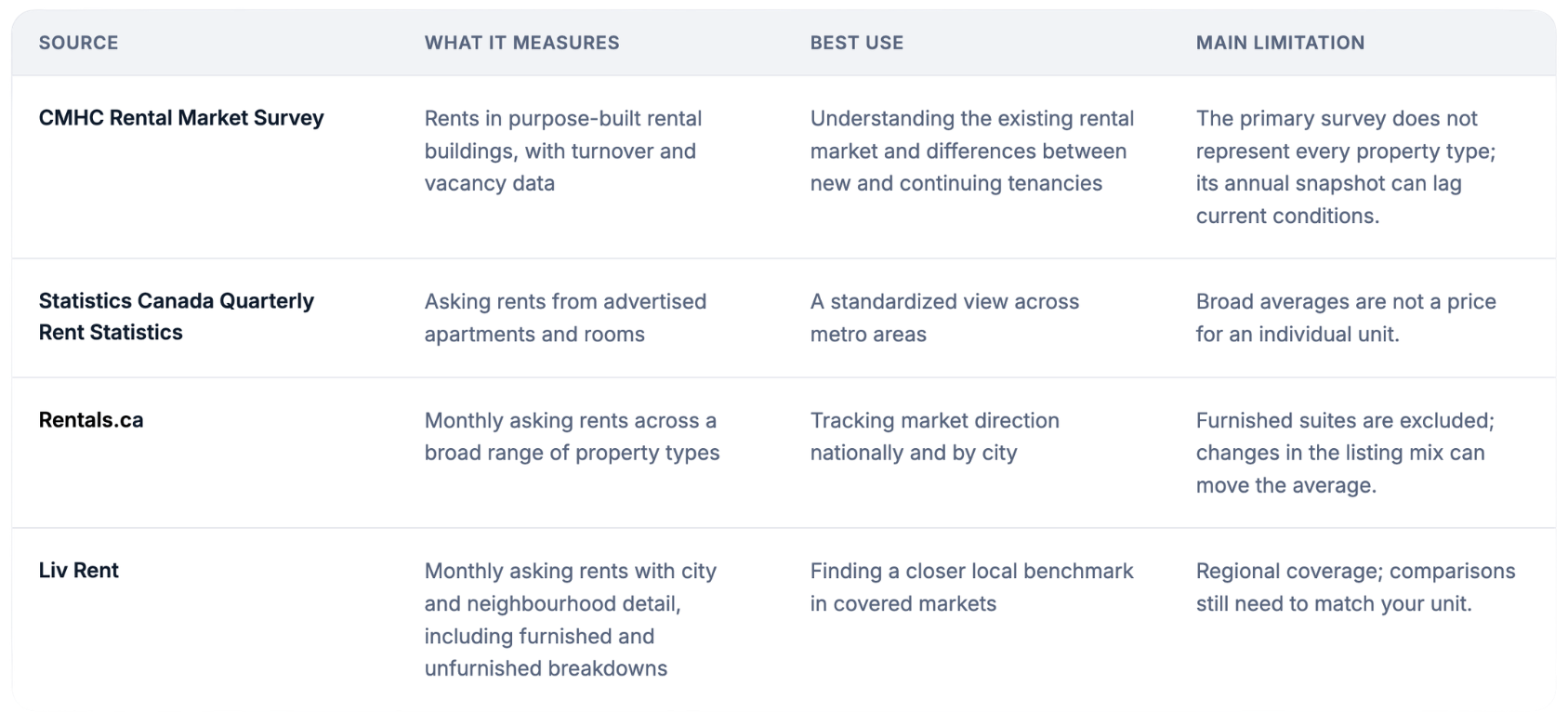
CMHC: Existing Rents, Vacancy and Turnover
CMHC's Rental Market Survey primarily covers purpose built rental structures with at least three units. Its annual October survey gives you a view of rents and vacancy in that market.
It also separates rents for units that changed tenants in the past 12 months from those that did not. That distinction helps explain the gap between new and continuing tenancies.
Use it for market context. If you own a condo or basement suite, check the survey coverage before applying a headline average to your property.
Statistics Canada: A Standardized Asking-Rent View
Quarterly Rent Statistics covers advertised apartments and rooms across 42 census metropolitan areas. It is useful for comparing asking rents using a consistent framework.
One caveat matters: its listing inputs include the Rentals.ca Network and Zumper. Statistics Canada applies its own validation and removes duplicates, but the underlying data overlaps with rental platforms.
Agreement between Statistics Canada and Rentals.ca is not fully independent confirmation. They provide related views of listing data, with different methods applied. The technical methodology explains that relationship.
Rentals.ca and Urbanation: Monthly Market Direction
The National Rent Report covers asking rents for apartments, condos, basement suites, townhouses and houses. That breadth makes it useful for landlords whose properties fall outside CMHC's primary survey.
Furnished suites are excluded. Averages can also change because of what gets listed: a month with more downtown condos may look different from one with more suburban houses.
Use it to understand direction, then narrow the comparison. A shift in the average does not necessarily mean every type of unit changed by the same amount.
Liv Rent: Local Detail and Furnished Comparisons
Liv Rent's monthly reports cover Metro Vancouver, Ontario, Calgary, Edmonton, Montreal and Winnipeg. City and neighbourhood detail helps you move beyond broad regional averages.
Its furnished and unfurnished breakdowns are particularly useful if you rent a furnished unit. The reports draw from its own listings and listings collected from other sites, with duplicates and stale ads filtered out.
Use the closest relevant breakdown. Metro Vancouver and the City of Vancouver are different geographies; furnished and unfurnished units are different comparisons. Local detail helps only when it describes the property you are pricing.
What If You Already Have a Tenant?
CMHC's paid-rent, turnover and vacancy data can help you understand how continuing tenancies compare with newly rented units. Current comparable listings add context about the competition if your property becomes vacant.
A gap between new and continuing rents does not, by itself, tell you how easily you would find another tenant or what turnover would cost. Those decisions also require property-specific information.
Market data also does not determine the rent increase permitted for an existing tenancy. Check the applicable provincial guidance; for B.C., see our rent increase guide.
Three Checks Before You Act on a Rent Headline
Ask what is measured, which properties are included and which location is covered. Then check the reporting period. Those details tell you whether the number is relevant to your decision.
Once you have a pricing range, use our landlord launch checklist to prepare the listing and next steps.
FAQ
Does CMHC rent data include condos and basement suites?
Not in the primary Rental Market Survey, which covers purpose built rental structures with at least three units. CMHC runs a separate Secondary Rental Market Survey covering rented condominiums, houses, duplex units and accessory apartments in 17 metro areas. Check which survey a quoted average comes from.
How often is each rent report published?
CMHC publishes its Rental Market Report annually from an October survey, plus a mid year update. Statistics Canada publishes Quarterly Rent Statistics quarterly. Rentals.ca and Urbanation, and Liv Rent, publish monthly.
Does an asking rent report show what units actually rented for?
No. Asking rent is the advertised price of an available unit. Use it to understand the competition, rather than treating it as confirmation of the rent agreed in a signed lease.